The beauty and aesthetics industry continues to develop as more people look for professional skincare, beauty treatments and non-surgical aesthetic services. As a result, learning the right techniques through structured training can help students build practical knowledge and develop professional skills.
If you are searching for an aesthetic course in Pakistan, Cosmothetics Academy provides an opportunity to explore important areas of skincare, skin analysis, facial treatments, aesthetic technologies, hygiene and client consultation.
A good aesthetic course should combine theoretical knowledge with practical learning. Students need to understand different skin types, treatment principles, product selection, safety considerations and professional client care before performing any procedure within their permitted scope of practice.
Whether you are a beginner, beauty professional or someone looking to expand your existing skills, an aesthetics course can provide a structured starting point for professional development.
What Is an Aesthetic Course?
An aesthetic course is a professional training program that introduces students to skincare, beauty treatments and selected aesthetic techniques.
Depending on the course curriculum and the learner’s background, training may include:
- Skin anatomy and basic skin science
- Skin types and common concerns
- Professional skin analysis
- Facial treatments
- Skincare products and ingredients
- Treatment preparation and aftercare
- Aesthetic equipment fundamentals
- Hygiene and infection-control principles
- Client consultation
- Contraindications and safety considerations
- Practical treatment techniques
However, courses can differ significantly from one academy to another. Therefore, students should always review the actual syllabus before enrolling.
Why Study an Aesthetic Course in Pakistan?
Pakistan has a growing beauty, skincare and aesthetics sector. This has created interest in professional training for people who want to work in salons, skincare settings, beauty businesses or other appropriate professional environments.
An aesthetic course can help you develop a stronger understanding of professional skincare rather than relying entirely on informal learning.
1. Build Professional Knowledge
Structured education can help you understand why particular skincare techniques and products are used.
Instead of simply following a treatment routine, you can learn about skin characteristics, client needs and appropriate treatment considerations.
2. Develop Practical Skills
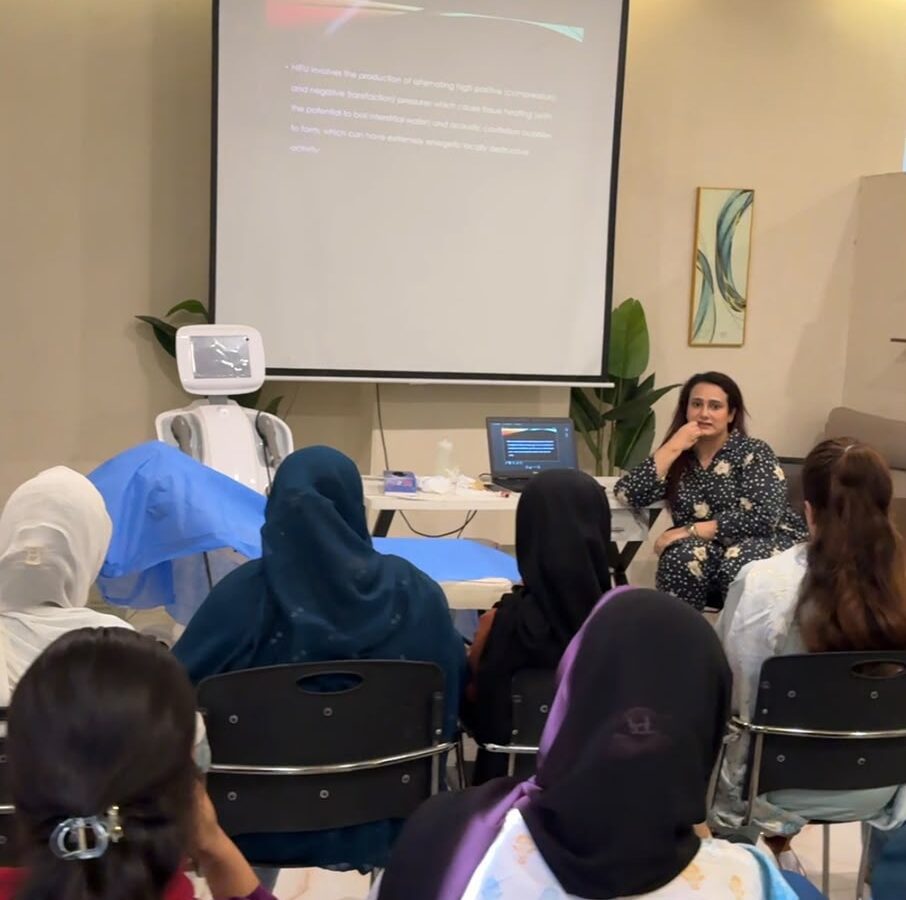
Aesthetic education becomes more useful when theoretical lessons are supported by supervised practical training.
Hands-on sessions may help students become familiar with professional equipment, treatment preparation and client-care procedures, depending on the course.
3. Understand Different Skin Types
Different clients can have different skin characteristics and concerns.
A course may introduce students to:
- Dry skin
- Oily skin
- Combination skin
- Sensitive skin
- Dehydrated skin
- Acne-prone skin
- Uneven skin tone
Understanding these differences is an important part of responsible skincare practice.
4. Improve Client Consultation Skills
Professional aesthetics involves more than performing a treatment.
Students should also learn how to communicate with clients, understand their concerns, explain treatment expectations and identify situations where a treatment may not be appropriate.
What Can You Learn in an Aesthetic Course?
The exact curriculum depends on the training provider. However, a comprehensive aesthetic course in Pakistan may cover several important areas.
Skin Anatomy and Basic Skin Science
Students can begin with foundational knowledge about the skin and its structure.
Understanding the basic functions of the skin helps learners appreciate how different products and treatments interact with the skin.
Topics may include:
- Basic skin structure
- Skin functions
- Skin types
- Skin concerns
- Skin barrier
- Basic skin assessment
This foundation can make later practical lessons easier to understand.
Skin Analysis
Skin analysis is an important part of professional skincare.
Students may learn how to observe skin characteristics and identify visible concerns such as:
- Dryness
- Excess oil
- Congestion
- Uneven texture
- Dull appearance
- Visible pigmentation
- Acne-prone areas
A proper assessment can help guide appropriate skincare recommendations within the practitioner’s scope.
Facial Treatments
Many aesthetics courses introduce students to professional facial treatments.
Depending on the syllabus, training may include:
- Skin cleansing
- Exfoliation
- Mask application
- Hydration-focused treatments
- Facial massage techniques
- Product selection
- Post-treatment skincare
Students should confirm which facial procedures are actually included before registering.
Skincare Products and Ingredients
Product knowledge is another valuable part of aesthetic education.
Students can learn about different skincare categories and how ingredients are commonly used.
Training may discuss:
- Cleansers
- Moisturizers
- Sunscreens
- Serums
- Exfoliating products
- Hydrating ingredients
- Products for specific skin concerns
Understanding product selection can help professionals provide more informed skincare recommendations.
Advanced Aesthetic Training
Some aesthetic programs may also introduce students to advanced technologies and procedures.
Depending on the learner’s qualifications and the academy’s curriculum, these topics may include:
Laser and Light-Based Technologies
Students may receive an introduction to aesthetic laser and light-based technologies, including their basic principles, treatment considerations and safety requirements.
Microneedling
Some programs cover the principles of microneedling, including treatment preparation, skin assessment, hygiene and aftercare.
Chemical Peel Fundamentals
Training may introduce different types of professional exfoliation and explain basic considerations for selecting treatments according to skin characteristics.
Skin Rejuvenation
Students may learn about different approaches used to improve the appearance of skin texture, tone and overall skin quality.
Important: Advanced medical aesthetic procedures may require specific professional qualifications, supervision or authorization under applicable Pakistani rules. Completing a course does not automatically authorize every learner to perform medical procedures.
Practical Training Matters
Reading about aesthetic treatments is useful, but practical training can make education more meaningful.
A well-structured course should ideally give learners opportunities to understand:
- Treatment preparation
- Equipment handling
- Hygiene procedures
- Client positioning
- Product application
- Treatment protocols
- Aftercare
- Client communication
For advanced procedures, practical training should be appropriate to the learner’s qualifications and carried out under suitable professional supervision.
Before enrolling, ask the academy how much practical training is included and whether students practice on models or receive demonstrations.
Hygiene and Safety in Aesthetic Training
Hygiene should be an essential part of any professional aesthetics education.
Students should understand the importance of:
- Clean treatment areas
- Proper hand hygiene
- Appropriate protective equipment
- Clean tools and equipment
- Proper product handling
- Safe disposal practices
- Client screening
- Treatment documentation
- Following applicable infection-control procedures
These practices help create a professional treatment environment and reduce avoidable risks.
Who Can Join an Aesthetic Course in Pakistan?
The eligibility requirements depend on the individual course.
An aesthetics program may be suitable for:
- Beginners interested in skincare
- Beauty professionals
- Beauticians
- Salon professionals
- Skincare practitioners
- Aesthetic technicians
- Existing beauty-business owners
- Professionals looking to expand their knowledge
However, advanced medical aesthetic procedures are different from general beauty and skincare services.
If a course includes injectables, medical treatments, lasers or other regulated procedures, prospective students should confirm the eligibility requirements before enrollment.
Benefits of Learning Aesthetics Professionally
A structured aesthetic course can provide several educational benefits.
Better Understanding of Skincare
You can develop a more organized understanding of skin types, concerns, products and treatment principles.
Practical Exposure
Hands-on learning can help you become familiar with professional treatment processes.
Improved Client Communication
Training can teach you how to discuss client concerns, explain procedures and provide appropriate aftercare information.
Professional Development
An aesthetics course can complement existing beauty or skincare skills and help learners explore additional areas of the industry.
Foundation for Further Learning
Students who develop strong fundamentals can later explore more specialized training, subject to their educational background and professional scope.
Aesthetic Course vs Beautician Course
Although these fields overlap, they are not always identical.
A beautician course may cover a broader range of salon services such as:
- Makeup
- Hair styling
- Manicure
- Pedicure
- Waxing
- Threading
- Basic skincare
An aesthetic course may place greater emphasis on:
- Skin analysis
- Professional skincare
- Facial treatments
- Skin science
- Aesthetic technologies
- Treatment protocols
- Client assessment
The right choice depends on your career interests and the actual curriculum offered by the training provider.
How to Choose an Aesthetic Course in Pakistan
Choosing a course requires more than comparing advertisements or course titles.
Consider the following points.
Check the Curriculum
Review the complete syllabus and make sure it matches your learning goals.
Ask About Practical Training
Find out how much hands-on training is provided and whether supervised practice is included.
Check Trainer Experience
Ask about the instructors’ relevant professional and teaching backgrounds.
Understand Eligibility
This is particularly important if the course covers medical aesthetic procedures.
Ask About Certification
Understand exactly what certificate, diploma or other document the academy provides.
Do not assume that a course certificate is the same as a government license, university qualification or professional authorization.
Compare Course Duration and Schedule
Check the actual duration, class frequency and practical hours before making a decision.
Review Training Facilities
Where possible, look at the classroom, treatment areas, equipment and learning environment.
Why Consider Cosmothetics Academy?
Cosmothetics Academy is positioned as an aesthetics training academy in Lahore for learners interested in developing professional knowledge and practical skills in the beauty and aesthetics field.
Training can focus on areas such as skincare, skin analysis, facial treatments, aesthetic technologies, hygiene and professional client care, depending on the specific program.
For prospective students, the most important step is to select a course that matches their existing qualifications, career goals and intended scope of practice.
Before publishing this page, add the academy’s actual address, phone number, course duration, fees, eligibility requirements, practical hours, trainer information and certificate details so visitors can make an informed decision.
Career Opportunities After Aesthetic Training
Career options depend on the learner’s qualifications, experience, local requirements and the services they are legally permitted to provide.
Depending on their background, learners may explore opportunities in:
- Beauty salons
- Skincare centers
- Aesthetic clinics
- Wellness businesses
- Beauty training environments
- Personal skincare services
- Beauty entrepreneurship
Some students may also use their training as a foundation for further specialized education.
However, an aesthetic course should not be presented as automatically qualifying someone to practice medicine or perform regulated medical procedures.
Can an Aesthetic Course Make You a Doctor?
No.
An aesthetic course does not replace a medical degree or medical training.
If someone wants to become a doctor, they need to follow the appropriate medical education and licensing pathway.
Aesthetic education can provide specialized knowledge, but its scope depends on the learner’s previous qualifications and the nature of the course.
This distinction is particularly important for courses involving injectables, medical lasers or other clinical procedures.
Aesthetic Course in Pakistan for Beginners
Beginners can start with foundational subjects before moving into advanced topics.
A sensible learning pathway may include:
- Basic skin science
- Skin types and analysis
- Professional skincare
- Facial treatments
- Hygiene and safety
- Client consultation
- Product knowledge
- Practical training
- Advanced aesthetic concepts
- Specialized training where appropriate
Starting with fundamentals can help learners understand more advanced techniques later.
Frequently Asked Questions
1. What is an aesthetic course in Pakistan?
An aesthetic course teaches professional concepts related to skincare, skin analysis, facial treatments, aesthetic technologies, hygiene and client care. The exact curriculum depends on the training provider.
2. Who can join an aesthetic course?
Eligibility varies by program. Beginners and beauty professionals may be able to join introductory courses, while advanced medical aesthetic training may have specific professional requirements.
3. Is an aesthetic course suitable for beginners?
Yes, some programs are designed for beginners. Students should select a course that clearly explains its eligibility requirements and starting level.
4. What subjects are taught in an aesthetic course?
Subjects may include skin anatomy, skin analysis, skincare, facial treatments, product knowledge, hygiene, consultation and aesthetic technologies.
5. Does an aesthetic course make me a doctor?
No. An aesthetic course does not replace a medical degree or professional medical licensing.
6. Can I learn skincare through an aesthetic course?
Yes. Skincare and skin analysis are commonly included in aesthetic training, depending on the curriculum.
7. Does an aesthetic course include practical training?
Some courses include practical demonstrations and hands-on sessions. Always confirm the exact number of practical hours with the academy.
8. Can an aesthetic course teach laser treatments?
Some programs may introduce laser and light-based aesthetic technologies. Eligibility and practical use depend on the course, learner qualifications and applicable regulations.
9. Is certification provided after an aesthetic course?
This depends on the academy and program. Confirm the exact certificate or qualification provided before enrollment.
10. How long does an aesthetic course take in Pakistan?
Course duration varies considerably. Students should check the actual duration, class schedule and practical hours for the specific program.
11. Can beauticians study aesthetics?
Yes, beauticians may choose aesthetics training to expand their skincare and beauty knowledge, provided they meet the course’s eligibility requirements.
12. Can an aesthetic course help with a career in the beauty industry?
It can provide relevant knowledge and skills that may support professional development. Career opportunities depend on qualifications, experience, local requirements and permitted scope of practice.
13. Should I choose an aesthetic course or a beautician course?
It depends on your goals. Beautician courses may cover broader salon services, while aesthetic courses can focus more strongly on skincare, skin analysis and aesthetic treatments.
14. How can I choose an aesthetic course in Pakistan?
Compare the syllabus, practical training, eligibility, trainer background, facilities, course duration, certification details and overall learning structure before enrolling.