The aesthetics industry offers many opportunities for people interested in skincare, beauty and non-invasive aesthetic treatments. However, one important question often comes up: Can non-medics study aesthetics?
The answer depends on the type of aesthetic course and the procedures covered.
Some programs are designed for beauty and skincare professionals and focus on non-invasive treatments. Other programs involve injectables, blood-derived treatments or invasive procedures and may require a medical or paramedical qualification.
For anyone searching for aesthetic courses for non medics, understanding this difference is essential before choosing a training program.
Cosmothetics Academy in Lahore currently offers a Non-Invasive Aesthetics Diploma that its website states is open to beauty and skincare professionals. The published program covers chemical peels, Hydrafacials, microneedling, laser skin rejuvenation, skin analysis and consultation, client safety and aftercare. The academy currently lists the program as 150+ hours, foundation to advanced level.
What Are Aesthetic Courses for Non Medics?
Aesthetic courses for non-medics are educational programs that allow eligible learners without a medical degree to develop skills in selected areas of beauty, skincare and non-invasive aesthetics.
Depending on the course, subjects may include:
- Skin anatomy and basic skin science
- Skin types and skin analysis
- Professional skincare
- Facial treatments
- Chemical peels
- Hydrafacial
- Microneedling fundamentals
- Laser skin rejuvenation fundamentals
- Client consultation
- Hygiene and infection-control principles
- Treatment preparation
- Aftercare
- Professional client communication
The exact curriculum varies between academies.
Importantly, completing a non-medical aesthetic course does not turn a learner into a doctor, dermatologist or other licensed medical professional. A student’s permitted scope of practice depends on their existing qualifications, the procedure involved and applicable regulations.
Can Non-Medics Study Aesthetics?
Yes, some aesthetics courses are specifically suitable for non-medical learners.
However, not every aesthetic procedure is appropriate for someone without a medical or paramedical background.
Cosmothetics Academy currently distinguishes between its non-invasive and invasive/injectable education. According to its published information, the Non-Invasive Aesthetics Diploma is open to beauty and skincare professionals, while invasive and injectable modules require a medical or paramedical qualification.
This distinction should be one of the first things you check when comparing aesthetic courses.
Non-Invasive vs Invasive Aesthetic Training
Understanding the difference can help you choose a course that matches your background.
Non-Invasive Aesthetics
Non-invasive aesthetics generally focuses on treatments that do not involve conventional surgery or injectable procedures.
Examples can include:
- Chemical peels
- Hydrafacial
- Selected facial treatments
- Skin analysis
- Certain non-invasive skin rejuvenation technologies
- Selected laser/light-based treatments
- Skincare protocols
The exact scope depends on the training program and professional regulations.
Invasive and Injectable Aesthetics
Invasive or injectable procedures can include treatments involving:
- Needles
- Dermal fillers
- PRP
- Blood-derived procedures
- Injectable treatments
- Other clinical procedures
These procedures can have additional qualification, supervision and regulatory requirements.
Cosmothetics Academy separately lists an Invasive & Injectables Diploma and states that invasive/injectable modules require medical or paramedical qualifications.
Therefore, someone searching for aesthetic courses for non-medics should generally look carefully at non-invasive training rather than assuming every aesthetic course is open to them.
What Can Non-Medics Learn in an Aesthetic Course?
A good course should provide more than demonstrations of individual treatments.
1. Skin Anatomy and Skin Science
Understanding the basic structure and function of the skin creates a foundation for professional skincare.
Students may learn about:
- Epidermis and dermis
- Skin barrier
- Sebum production
- Skin types
- Skin sensitivity
- Basic pigmentation concepts
- Common skincare concerns
This knowledge helps learners understand why different clients may require different treatment approaches.
2. Skin Analysis
Skin analysis is an important part of aesthetic education.
Students can learn how to assess factors such as:
- Skin type
- Oiliness
- Dryness
- Sensitivity
- Texture
- Pigmentation
- Visible signs of ageing
- Acne-prone skin
- Client skincare habits
A proper assessment can help determine whether a particular treatment is appropriate.
It also teaches an important professional principle: not every treatment is suitable for every client.
3. Client Consultation
Aesthetic education should include professional consultation skills.
A consultation may involve discussing:
- Client concerns
- Current skincare routine
- Previous treatments
- Allergies
- Skin sensitivity
- Relevant medications
- Previous reactions
- Expectations
- Desired outcomes
Students should also learn when a client may need referral to an appropriately qualified healthcare professional.
4. Chemical Peel Training
Chemical peels are commonly included in non-invasive aesthetics education.
Training may introduce:
- Different types of peels
- Basic ingredient knowledge
- Skin assessment
- Treatment preparation
- Application principles
- Contraindications
- Safety precautions
- Post-treatment care
Chemical peels can produce irritation or pigmentation changes if used incorrectly, particularly on sensitive or darker skin. Therefore, training should emphasize assessment and appropriate protocols rather than simply teaching product application.
Cosmothetics Academy currently lists Chemical Peels among the core subjects of its Non-Invasive Aesthetics Diploma.
5. Hydrafacial Training
Hydrafacial-style treatments are another area that can be included in non-invasive aesthetics education.
Students may learn about:
- Skin assessment
- Treatment preparation
- Cleansing
- Exfoliation
- Extraction principles
- Hydration
- Product selection
- Aftercare
Cosmothetics Academy’s current Non-Invasive Aesthetics Diploma lists Hydrafacials as one of its training areas.
6. Microneedling Fundamentals
Microneedling uses controlled micro-injuries to stimulate the skin’s natural healing response.
A structured course may introduce:
- Basic microneedling principles
- Skin assessment
- Device handling
- Treatment preparation
- Hygiene
- Contraindications
- Treatment planning
- Aftercare
Microneedling is not simply a beauty technique that should be learned from an online video. Proper training should cover client assessment, sanitation and potential complications.
Cosmothetics Academy currently lists microneedling within its Non-Invasive Aesthetics Diploma.
7. Laser Skin Rejuvenation Fundamentals
Modern aesthetics also uses various light and laser technologies.
A non-invasive aesthetics program may introduce learners to:
- Basic laser principles
- Skin rejuvenation concepts
- Device safety
- Skin assessment
- Treatment preparation
- Client protection
- Aftercare
However, learning about a laser does not automatically authorize a learner to operate every type of laser or perform regulated medical treatment.
The learner’s qualification, training, professional scope, device requirements and local rules all need to be considered.
Cosmothetics Academy currently lists laser skin rejuvenation within its Non-Invasive Aesthetics Diploma.
Why Practical Training Matters
Aesthetic education is a practical field.
Reading about a procedure is different from learning how to assess a client, prepare the treatment area, operate equipment appropriately and provide aftercare.
Practical training can help students develop:
- Equipment handling
- Treatment preparation
- Client positioning
- Hygiene routines
- Consultation skills
- Treatment sequencing
- Communication
- Aftercare knowledge
- Professional confidence
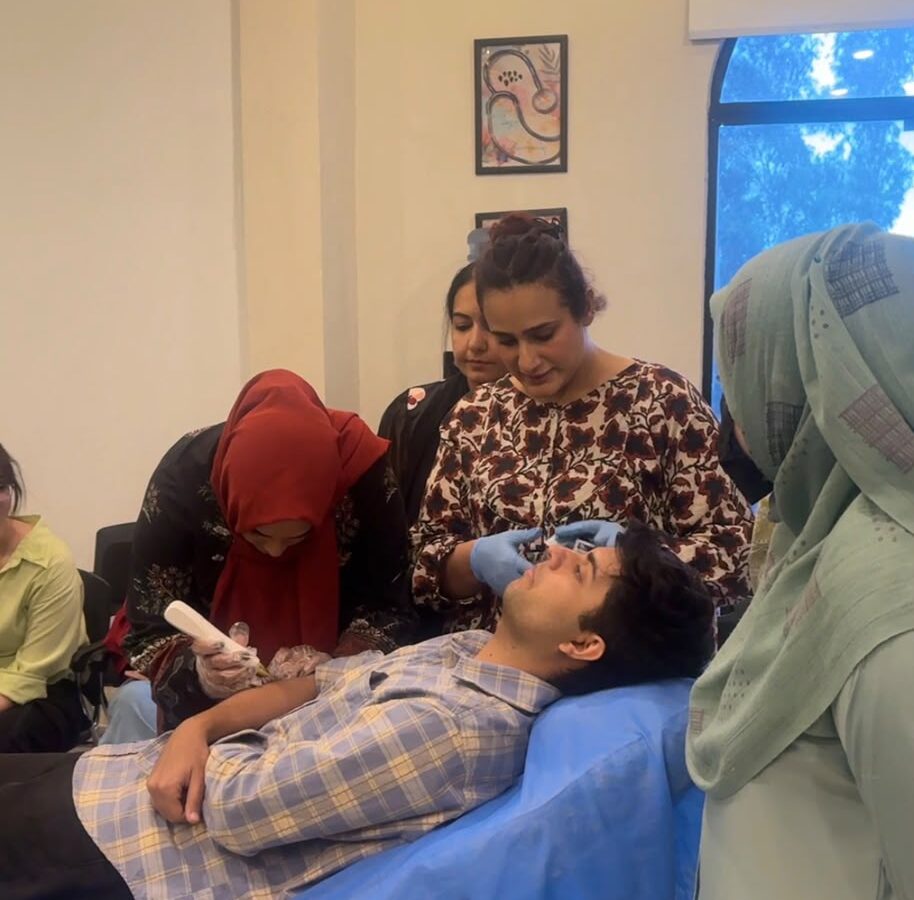
Cosmothetics Academy currently describes its training as hands-on, with supervised practical work on live models. Its website lists 150+ hands-on hours across its training information.
When comparing programs, ask how many practical hours belong specifically to the course you are considering.
Hygiene and Safety in Aesthetic Training
Safety should be a central part of any professional aesthetics course.
Students should understand:
- Hand hygiene
- Equipment cleaning
- Disinfection
- Personal protective equipment
- Cross-contamination prevention
- Treatment-room preparation
- Safe product handling
- Waste management
- Contraindications
- Aftercare
- When to stop or refer a client
This is particularly important because aesthetic procedures involve direct contact with clients and, depending on the procedure, specialized equipment or skin penetration.
Who Can Benefit From Aesthetic Courses for Non Medics?
These courses may be relevant to people working in or interested in:
Beauty Professionals
Beauticians and beauty therapists can expand their skincare knowledge and learn additional non-invasive techniques.
Skincare Professionals
Existing skincare practitioners may use structured education to broaden their treatment knowledge.
Aestheticians
Aesthetic professionals can pursue further training in skin analysis, treatment planning and non-invasive technologies.
Salon Professionals
Salon professionals interested in adding skincare-focused services may benefit from appropriate training.
Beauty Entrepreneurs
People planning a beauty or skincare business can use professional education to build technical knowledge alongside business skills.
Eligibility varies by program, so applicants should confirm the academy’s current requirements before enrollment.
Can Beginners Join Aesthetic Courses?
This depends on the specific course.
Some introductory programs are designed for learners starting their beauty or skincare education. Others expect previous experience or professional qualifications.
For Cosmothetics Academy’s current non-invasive diploma, the academy states that it is open to beauty and skincare professionals. Therefore, someone without a medical background should discuss their existing education and experience with the academy before applying.
Does an Aesthetic Course Make You a Doctor?
No.
An aesthetic course is not equivalent to:
- MBBS
- BDS
- Dermatology specialization
- Medical registration
- A recognized medical postgraduate qualification
A non-medical aesthetic course can provide training in the subjects included in the curriculum, but it does not change a learner’s underlying professional qualification.
This distinction is especially important when a course covers terms such as aesthetic medicine, aesthetic physician or medical aesthetics.
Can Non-Medics Perform Injectables After an Aesthetic Course?
A certificate or diploma should not automatically be interpreted as authorization to perform regulated medical or injectable procedures.
Injectables can include procedures such as:
- Dermal fillers
- Certain injectable skin treatments
- PRP
- Other needle-based clinical procedures
The eligibility to perform these procedures depends on professional qualifications, applicable regulations, supervision and the specific treatment.
Cosmothetics Academy explicitly separates its non-invasive program from invasive and injectable training and states that medical or paramedical qualifications are required for its invasive/injectable modules.
What Is the Cosmothetics Academy Non-Invasive Aesthetics Diploma?
Cosmothetics Academy currently offers a Non-Invasive Aesthetics Diploma at its Lahore campus.
The academy’s published course information lists:
- Duration: 150+ hours
- Level: Foundation to Advanced
- Campus: Lahore
- Fee: On request
- Subjects: Chemical Peels, Hydrafacials, Microneedling, Laser Skin Rejuvenation, Skin Analysis & Consultation, Client Safety & Aftercare
The academy’s contact page states that the non-invasive diploma is open to beauty and skincare professionals, while invasive and injectable modules require a medical or paramedical qualification.
Why Choose Cosmothetics Academy for Non-Medic Aesthetic Training?
When evaluating a training academy, look beyond the course title.
Useful factors include:
- Relevant curriculum
- Practical training
- Supervised sessions
- Skin analysis education
- Safety and hygiene
- Consultation skills
- Qualified trainers
- Appropriate equipment
- Clear eligibility requirements
- Transparent qualification details
Cosmothetics Academy currently presents its training as expert-led and hands-on, with its Lahore campus at 3rd Floor, 1, Mall 2, Eden Canal Villas, Lahore. The academy’s published contact number is 0324 915 0000.
For current fees, intake dates and eligibility, prospective students should confirm the details directly with the academy because course information can change.
How to Choose the Right Aesthetic Course for Non Medics
Before enrolling, ask these questions.
1. Who Is Eligible?
Confirm whether the course accepts:
- Beauty professionals
- Skincare professionals
- Aestheticians
- Beginners
- Other non-medical learners
2. What Treatments Are Included?
Request the complete syllabus.
Do not choose a course simply because its title sounds advanced.
3. How Much Practical Training Is Provided?
Ask for the number of practical hours and whether training is supervised.
4. What Equipment Will You Use?
If technology-based treatments are included, ask which devices students will actually use.
5. What Safety Topics Are Covered?
Look for training in:
- Contraindications
- Hygiene
- Skin assessment
- Adverse reactions
- Aftercare
- Referral procedures
6. What Qualification Will You Receive?
Ask for the exact name of the certificate or diploma.
7. What Does the Qualification Actually Allow You to Do?
This is particularly important for non-medical students.
A qualification may document completion of training without giving independent authorization to perform regulated medical procedures.
Aesthetic Course vs Beautician Course
These two types of education can overlap, but they are not necessarily identical.
A beautician course may cover a broader range of beauty services, including:
- Makeup
- Hair
- Nails
- Threading
- Waxing
- Facials
- Basic skincare
An aesthetic course generally places greater emphasis on skin science, skin analysis, treatment technologies and structured aesthetic procedures.
The right option depends on your career goals.
Aesthetic Course vs Dermatology Qualification
These are completely different educational pathways.
A dermatologist is a medical doctor who has completed medical education and specialist training in dermatology.
An aesthetic course may teach selected cosmetic or skincare techniques without providing a medical qualification.
Therefore, people researching aesthetic courses for non medics should carefully distinguish professional aesthetics training from medical education.
Career Opportunities After Non-Medical Aesthetic Training
Aesthetic education can support different career directions depending on the learner’s existing qualifications and professional scope.
Potential areas may include:
- Skincare services
- Beauty businesses
- Non-invasive aesthetic services where permitted
- Salon-based skincare
- Aesthetic clinic support roles
- Further skincare education
- Beauty entrepreneurship
- Continuing professional development
However, completing a course does not guarantee employment, clients, income or business success.
Practical experience, communication, business skills, professional qualifications and compliance with applicable rules all remain important.
Continue Learning After Your Aesthetic Course
Aesthetics is an evolving field.
After completing a course, professionals can continue learning about:
- New skincare technologies
- Skin science
- Product ingredients
- Treatment protocols
- Hygiene
- Client consultation
- Safety
- Professional ethics
- Evidence-based practice
- New aesthetic devices
Continuing education can help practitioners keep their knowledge current.
Final Thoughts
If you are searching for aesthetic courses for non medics, the first step is to identify a course that matches your educational background and professional goals.
Non-medical learners can study selected areas of aesthetics, particularly non-invasive skincare and aesthetic treatments, but invasive and injectable procedures can have different qualification requirements.
Cosmothetics Academy currently offers a 150+ hour Non-Invasive Aesthetics Diploma in Lahore covering chemical peels, Hydrafacials, microneedling, laser skin rejuvenation, skin analysis and consultation, plus client safety and aftercare. The academy states that this non-invasive diploma is open to beauty and skincare professionals, while its invasive/injectable modules require medical or paramedical qualifications.
Before enrolling, review the current syllabus, eligibility, practical training, qualification, fees and professional scope of the specific program.
Frequently Asked Questions
1. Can non-medics study aesthetic courses?
Yes. Some aesthetic courses are specifically designed for beauty and skincare professionals without medical qualifications. Eligibility depends on the specific course.
2. Does Cosmothetics Academy offer aesthetic courses for non-medics?
Yes. Cosmothetics Academy states that its Non-Invasive Aesthetics Diploma is open to beauty and skincare professionals.
3. What can non-medics learn in aesthetics?
Depending on the program, non-medics may learn skin analysis, skincare, chemical peels, Hydrafacial, microneedling, selected laser skin rejuvenation techniques, consultation, safety and aftercare.
4. Is a medical degree required for a non-invasive aesthetic course?
Not necessarily. Cosmothetics Academy currently states that its non-invasive diploma is open to beauty and skincare professionals. Invasive and injectable modules have separate medical or paramedical requirements.
5. How long is the Cosmothetics Academy non-invasive aesthetics course?
The academy currently lists its Non-Invasive Aesthetics Diploma as 150+ hours.
6. Does the course include practical training?
Yes. Cosmothetics Academy describes its aesthetics training as hands-on and supervised, including practical work on live models.
7. Can non-medics learn chemical peels?
Chemical peels can be included in non-invasive aesthetics education. Cosmothetics Academy currently lists chemical peels in its Non-Invasive Aesthetics Diploma.
8. Can non-medics learn Hydrafacial?
Yes. Hydrafacial is included in Cosmothetics Academy’s current Non-Invasive Aesthetics Diploma curriculum.
9. Can non-medics learn microneedling?
Microneedling can be included in appropriate aesthetic training programs. Cosmothetics Academy currently lists microneedling in its non-invasive diploma.
10. Can an aesthetic course make me a doctor?
No. An aesthetic course is not equivalent to an MBBS, BDS, dermatology specialization or medical registration.
11. Can I perform injectable treatments after an aesthetic course?
Not automatically. Injectable procedures may require specific medical or paramedical qualifications, professional scope and applicable regulatory requirements. Cosmothetics Academy states that its invasive/injectable modules require a medical or paramedical qualification.
12. Is an aesthetic course the same as a beautician course?
No. Although the subjects can overlap, aesthetic courses generally place greater emphasis on skin science, skin analysis and selected aesthetic technologies, while beautician courses may cover a broader range of beauty services.
13. Where is Cosmothetics Academy located?
Cosmothetics Academy currently lists its campus at 3rd Floor, 1, Mall 2, Eden Canal Villas, Lahore.
14. How can I find out about current admission requirements?
You can contact Cosmothetics Academy for current eligibility, intake dates, fees and course information. Its website currently lists 0324 915 0000 as the contact number.